


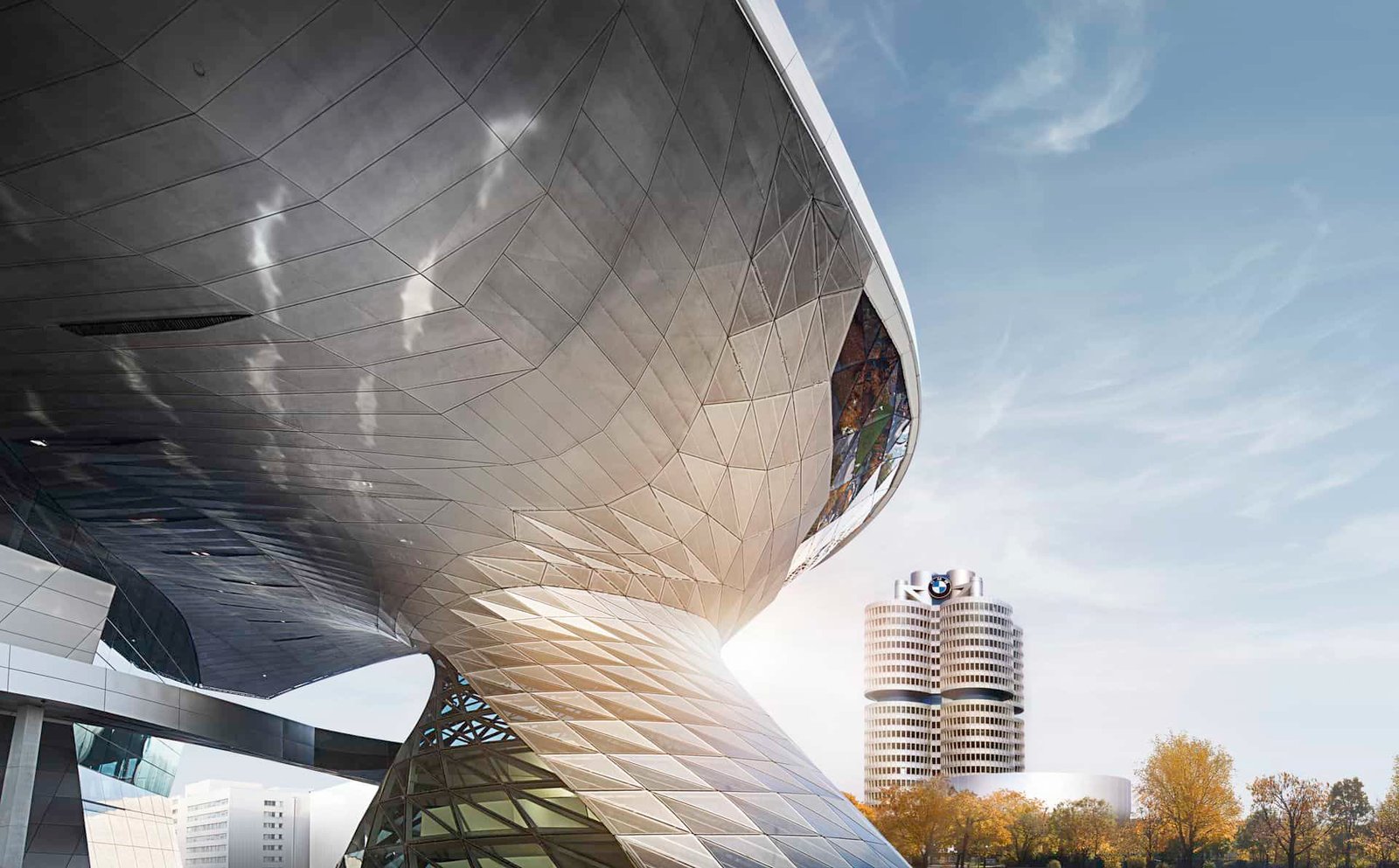
Twenty-five years ago, BMW started planning a building next to the Olympic Park in Munich. Nobody quite knew what it would become. Today, BMW Welt draws more than 2.2 million visitors a year — nearly three times the 850,000 originally projected — and has quietly become one of the most visited attractions in Bavaria.
We’ve been there more times than we can count. Every trip to Munich ends up there, even when it’s not on the agenda. There’s always a new exhibit, a car that just showed up, or something in the architecture you hadn’t noticed before. It doesn’t feel like a corporate showroom, which is probably the whole point.
A Different Kind of Brand Building
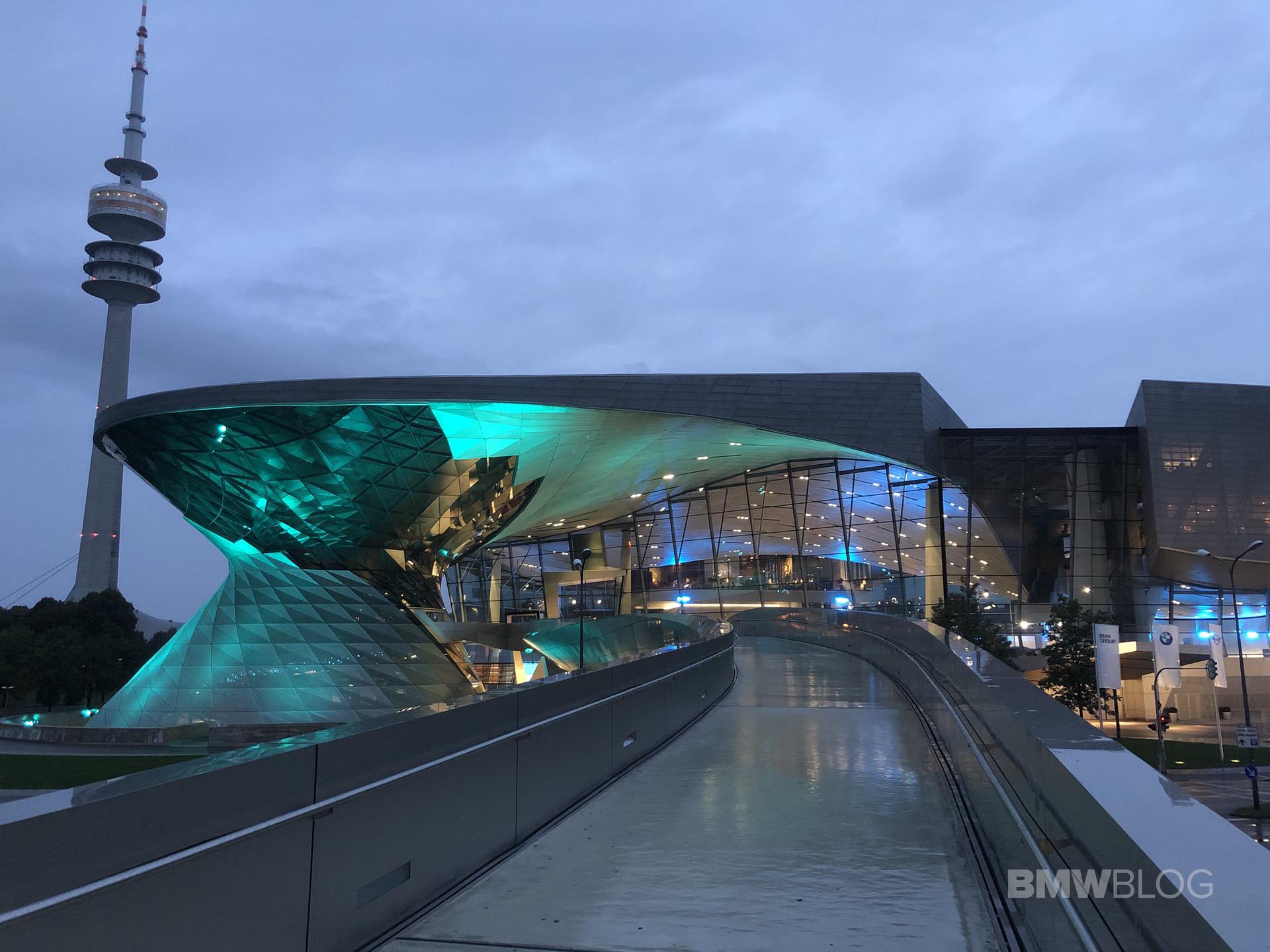
BMW Welt works because it doesn’t try to sell you anything. You can spend an afternoon there looking at the full lineup across BMW, BMW M, MINI, Motorrad, and Rolls-Royce, grab a meal at one of four restaurants — including the new fine-dining spot THE CLOUD by Käfer — take an architecture tour, or catch one of the 400 events hosted there each year. The BMW Welt Auditorium is Munich’s second-largest stage after the opera house. The Bavarian Sports Award is held there. The Blauer Panther TV & Streaming Award too.
None of that is accidental. People who will never buy a BMW walk through those doors and leave with a different impression of the company. That’s the whole game.
The European Delivery Program

For American BMW buyers, BMW Welt once had an even more specific significance. The European Delivery program used to let you order your car statesidefly to Munich, pick it up at BMW Welt, drive it around Europe for a few weeks, and have it shipped home — all at a meaningful discount. It was one of the best deals in the car business, full stop.
We did three deliveries through the program – 1, 2 and 3. The first time, the scale of the building alone was worth the flight. Staff knew your name, knew your spec, walked you through everything without rushing. The second time we knew what to expect and just enjoyed it more slowly. The third had a different feeling because it was an even deeper experience with the help of BMW M.
But during COVID-19, things changed, like many others. BMW eventually wound it down for U.S. customers, and the reasons given were logistics, regulations, shifting economics. But for the buyers who did it, that delivery moment at BMW Welt is still the story they tell. BMW doesn’t fully replicate that kind of memory anywhere else.
The Building Itself

The architect, Prof. Wolf D. Prix of Coop Himmelb(l)au, was a student of Karl Schwanzer — the man behind BMW’s Four-Cylinder headquarters. That lineage shows. Prix and a team of 120 architects packed 1,200 rooms into a structure that looks, from the outside, like it landed from somewhere else. The double cone, the canopy, the way it sits against the skyline — it still stops people mid-stride twenty years after opening.
The event spaces are available for private hire, which keeps the building economically active well beyond showroom hours and brings in audiences that have nothing to do with cars at all.
25 Years In
BMW Welt has become part of Munich the way the Marienplatz or the English Garden are part of Munich — people include it on itineraries without needing to be told to. That didn’t happen because of advertising. It happened because the experience held up. For enthusiasts, for architecture fans, for families with no particular interest in cars, it delivers something worth the trip.
For us, it’s just one of those places we keep going back to. There’s always a reason.

