
Article Summary
- The 2026 BMW iX3s covered about 249 miles (400 kilometers) and still had about 25% to 31% of battery charge left.
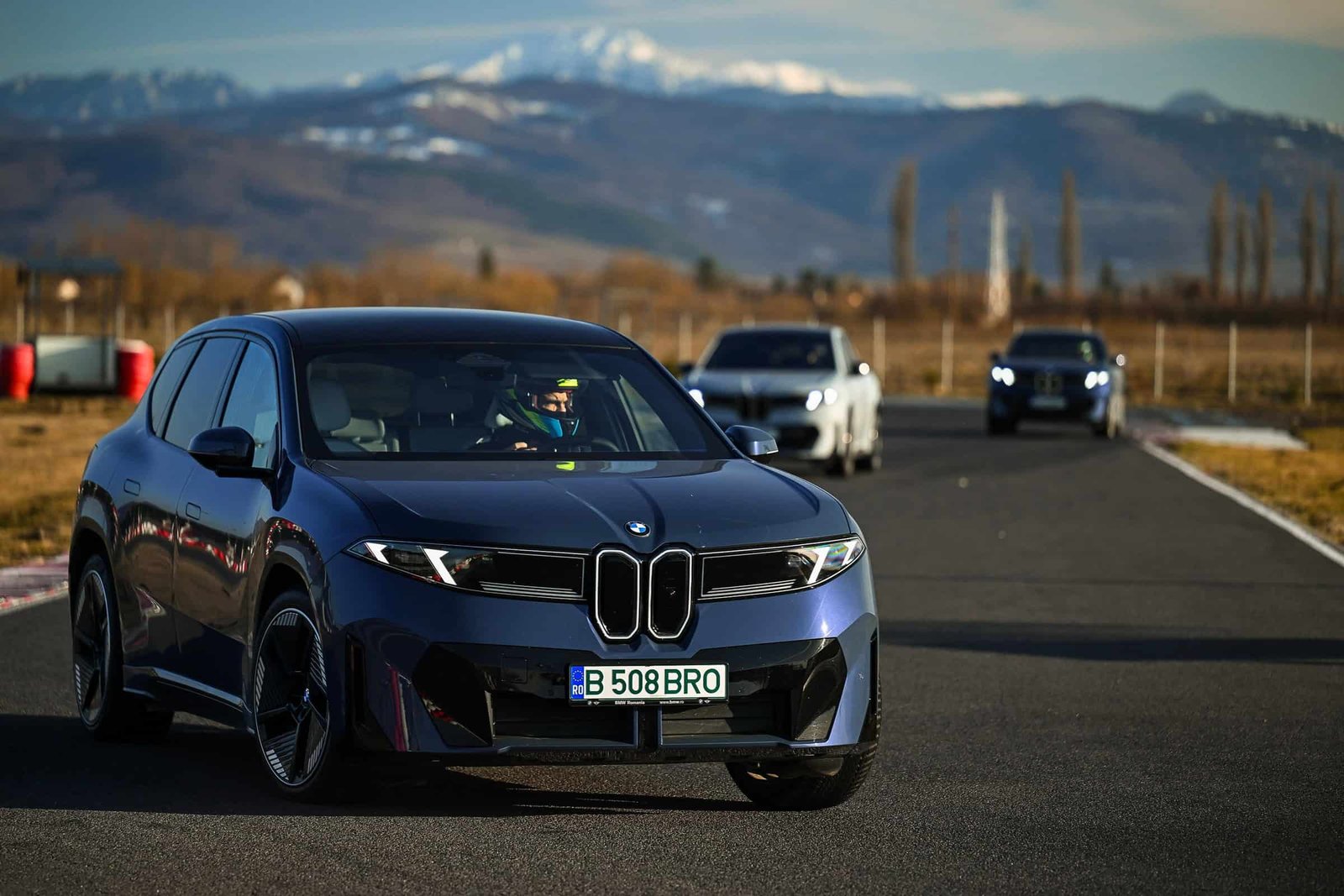
- The route from Bucharest to Poiana Brașov and back also included a quick stop at the Prejmer Raceway for a track run.
- The electric SUVs weren’t charged at all during the weekend trip.
With a WLTP range of 805 kilometers (500 miles), the new BMW iX3 wants to cure range anxiety once and for all. However, as is often the case with electric vehicles, real-world range is a different story. Although WLTP is closer to the truth than the NEDC test cycle it replaced, it’s still, let’s say… overly optimistic.
BMW Romania wanted to put those numbers to the test on public roads and without babying the 2026 iX3. No hypermiling was involved during a weekend trip from the capital Bucharest to Poiana Brașov and back. The route had all the ingredients, ranging from highways and national roads to mountain climbs. There was even a track session at the Prejmer Raceway.
All told, the iX3 fleet spent about six hours in mild winter conditions, covering 400 kilometers (249 miles). During the test run, temperatures ranged from 0 to 10 degrees Celsius (32 to 50 Fahrenheit). Not once did they stop to recharge the electric crossover’s 108.7-kWh battery pack. To make the test more scientific, Romanian journalists recorded the efficiency numbers. By the weekend’s end, the reported energy consumption ranged from 17.2 to 21.0 kWh per 100 kilometers (62 miles).

The iX3s still had about 25% to 31% of battery charge left. If the drivers had kept going until the batteries were completely empty, the Neue Klasse SUVs could’ve covered anywhere from 500 to 600 kilometers (311 to 373 miles). Sure, it’s a far cry from the quoted WLTP figure, but the range is comparable to that of a gasoline-fueled vehicle.
Diesel reigns supreme when it comes to racking up miles without stopping, which is why BMW has no intention of discontinuing the X3 20d xDrive or the six-cylinder 30d xDrive. The iX3 is the efficiency king among EVs from Bavaria, although we wonder whether that title will be temporary. Coming March 18, the i3 might go even farther if it gets the same battery. With a more aerodynamic shape and slightly less weight, we wouldn’t rule out a WLTP range exceeding the iX3 50 xDrive’s 805 kilometers (500 miles).
Looking further ahead, BMW is cooking up “40” versions of both the crossover and sedan. These cheaper models are believed to have a smaller battery with a net energy content of 82.6 kWhrather than 108.7 kWh. Inevitably, the range will suffer, but there will be some benefits. Both should cost less and shed significant weight. In the case of the rear-wheel-drive iX3 40, we’ve heard it could lose as much as 200 kilograms (441 pounds).
Ideally, some of us would want the rear-wheel-drive, single-motor version combined with the bigger battery. That setup would trump the xDrive model’s range by deleting the front motor and cutting weight. We’ll have to wait and see whether BMW intends to sell this configuration, but we wouldn’t hold our breath.
Photos: BMW Romania / Flavius Croitoru
