
BMW’s M-badged offerings provide drivers with the best possible driving engagement, road feel, and performance. But it comes at a price — literally. BMW M models, be it “M-lites” like the M340i and M240i or full-fat Ms like the M3 and M5, often cost tens of thousands more than the standard offering. There are also several other trade-offs drivers make when selecting the full BMW M model. Fuel economy is typically lower. Parts costs are higher. And, frankly, overall comfort in the cabin is sometimes inferior relative to more “basic” models.
So sure. That M badge on the back of the car represents the pinnacle of BMW performance. M cars are sharper, louder, faster, and more focused than their standard-production counterparts. But the reality is that most drivers don’t need that level of intensity. In daily traffic, on imperfect roads, and during long highway stints, balance often beats outright aggression. And few prove that theory better than these modern BMWs.
BMW 540i (G30) and BMW 550e xDrive (G60)
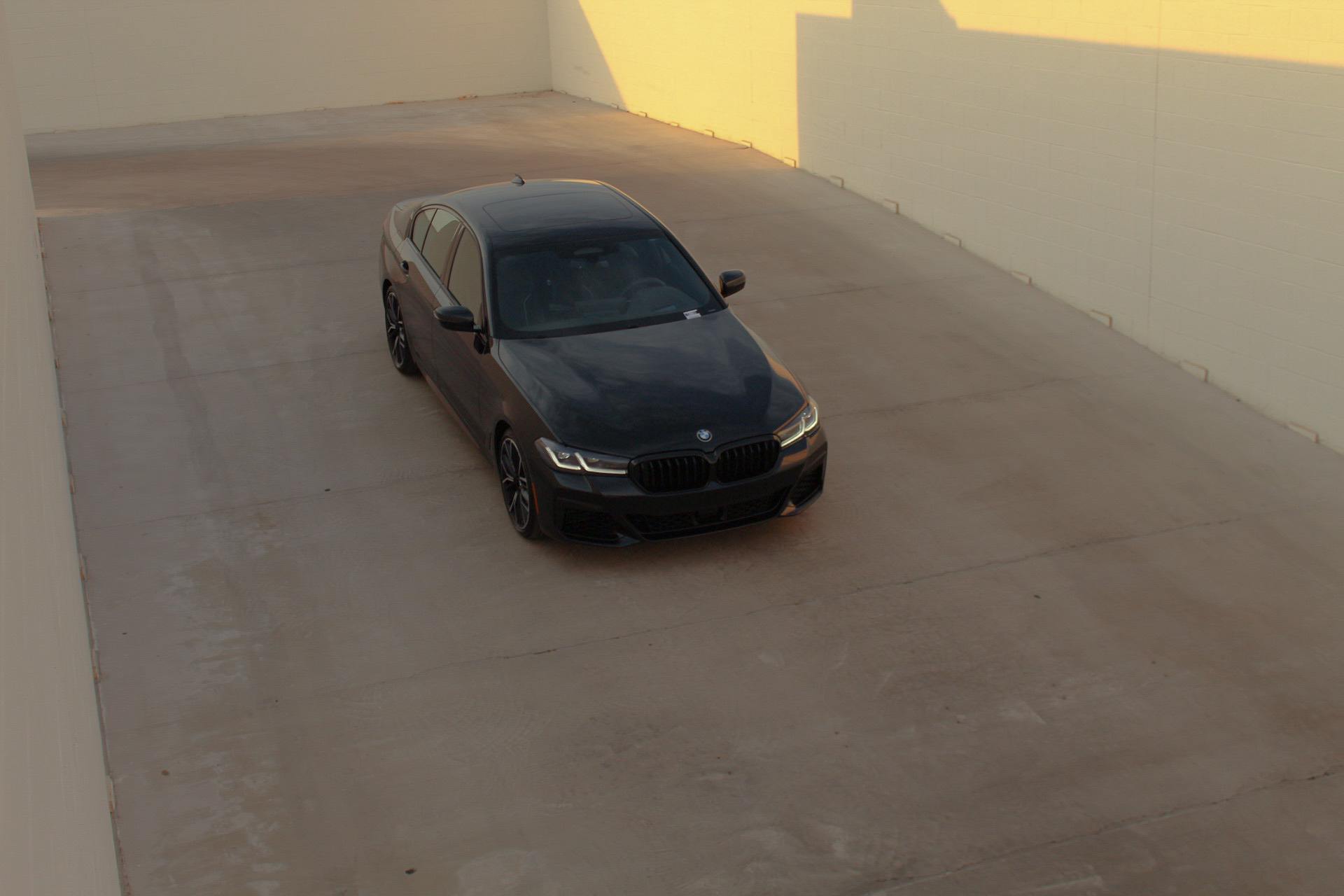
The 540i from the G30 BMW 5 Series generation remains a truly unsung hero. The 2021 BMW 540i was one of my earliest car reviews, but the novelty didn’t guarantee a favorable reception. Even though it was an LCI (mid life-cycle refresh) year, the car still didn’t get the full 385-horsepower B58 other “40” cars got. That said: it was still admirably quick in a straight line and felt luxurious at any speed. Steering was on the light side and there wasn’t a ton of feel, but the variable sport steering did an okay job of letting you know when the front wheels were doing. Furthermore, nothing but good things to say about the suspension tuning. Firm, but comfortable. Today, a G30 540i can be had for a pittance relative to a new M5.
We have to mention the other “M5 side door,” the 550e xDrive. I admittedly haven’t personally driven any G60 5 Series yet, but if you believe what you read in our 550e reviewit’s “better than the M5.” Combining a turbocharged inline-six with electric assistance, the 550e xDrive produces substantial system output while offering meaningful electric-only driving range. Sounds eerily similar to the M5. Of course, on a slightly smaller scale; the 550e delivers “just” 483 horsepower, 250-ish shy of the M5. Either way, it deserves a mention.
BMW iX (I20)

Although the iX doesn’t try to mimic an M SUV, its EV powertrain naturally lends itself to comparison. After all, instant torque and a low center of gravity have obvious performance benefits. Even in xDrive50 form, acceleration is forceful enough to embarrass many traditional performance SUVs. Equally impressive? The iX is composed at any speed, and the truck’s steering is way more communicative than it really has any business being. It’s fast, but the speed feels integrated rather than aggressive. For many drivers, that seamless, silent thrust might be more satisfying than the theatrics of a full M model. The cheaper iX xDrive45 does a similarly admirable job of making an EV fun to drive.
BMW 340i (F30)
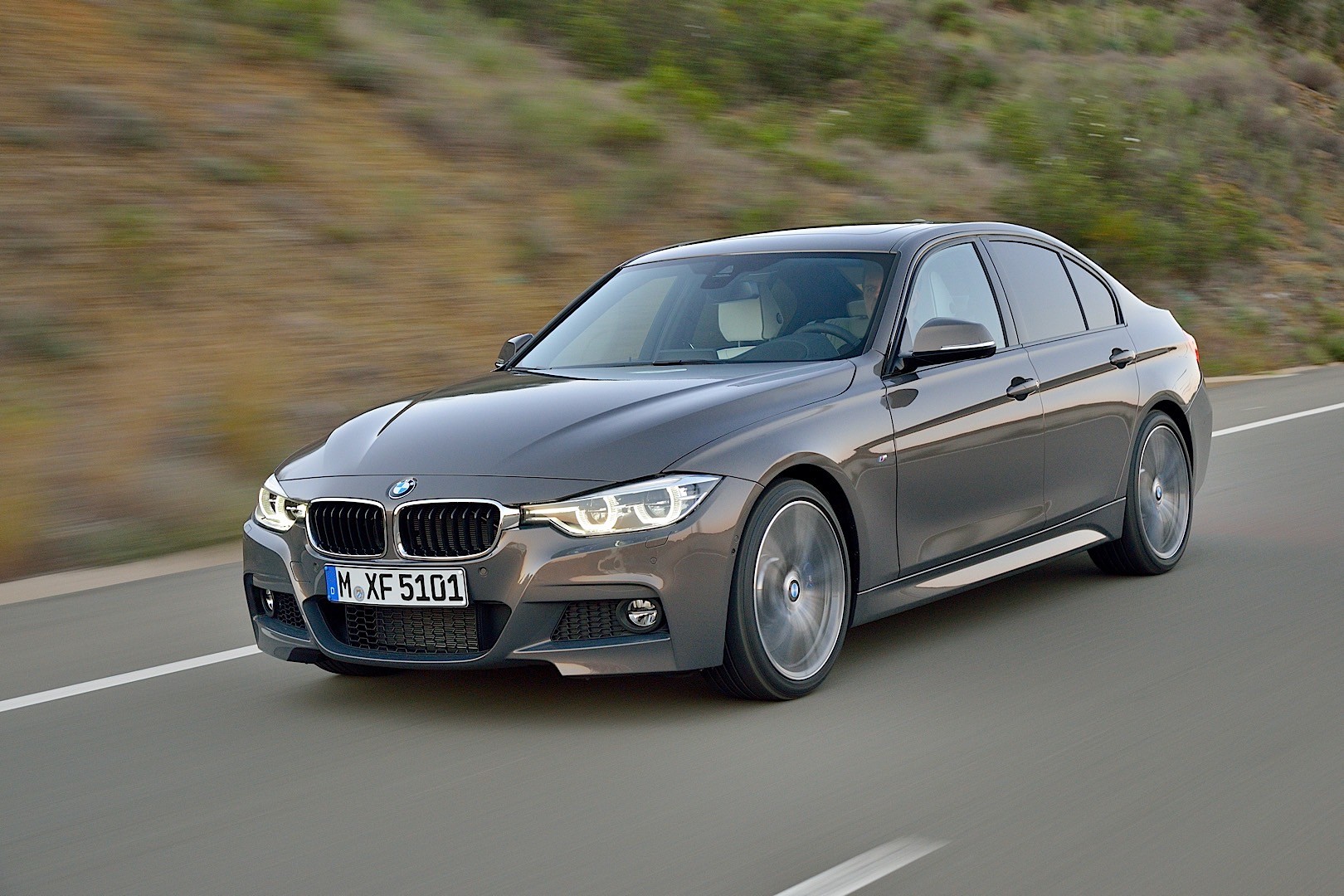
Before M Performance models became dominant in the lineup, the F30 340i was already demonstrating how much car BMW could deliver without going full M. Early B58 power, rear-wheel-drive availability, and a relatively lighter footprint give it an engaging, analog-adjacent feel compared to newer, heavier sedans. It’s quick enough to be genuinely entertaining, yet approachable at sane speeds. Maintenance and consumable costs are lower than an M3, and the ride is generally less punishing.
We’re pushing “modern” on this one a little bit. The last F30 sedans rolled out of Munich (and other plants) in 2018, making the newest one now eight years old. That said, the 340i still has a fairly modern iDrive interface (although sans Apple CarPlay), and you can even find one with a manual transmission! As a used market buy, it may be one of the smartest enthusiast sedans of the last decade.
BMW X5 xDrive50e (G05)
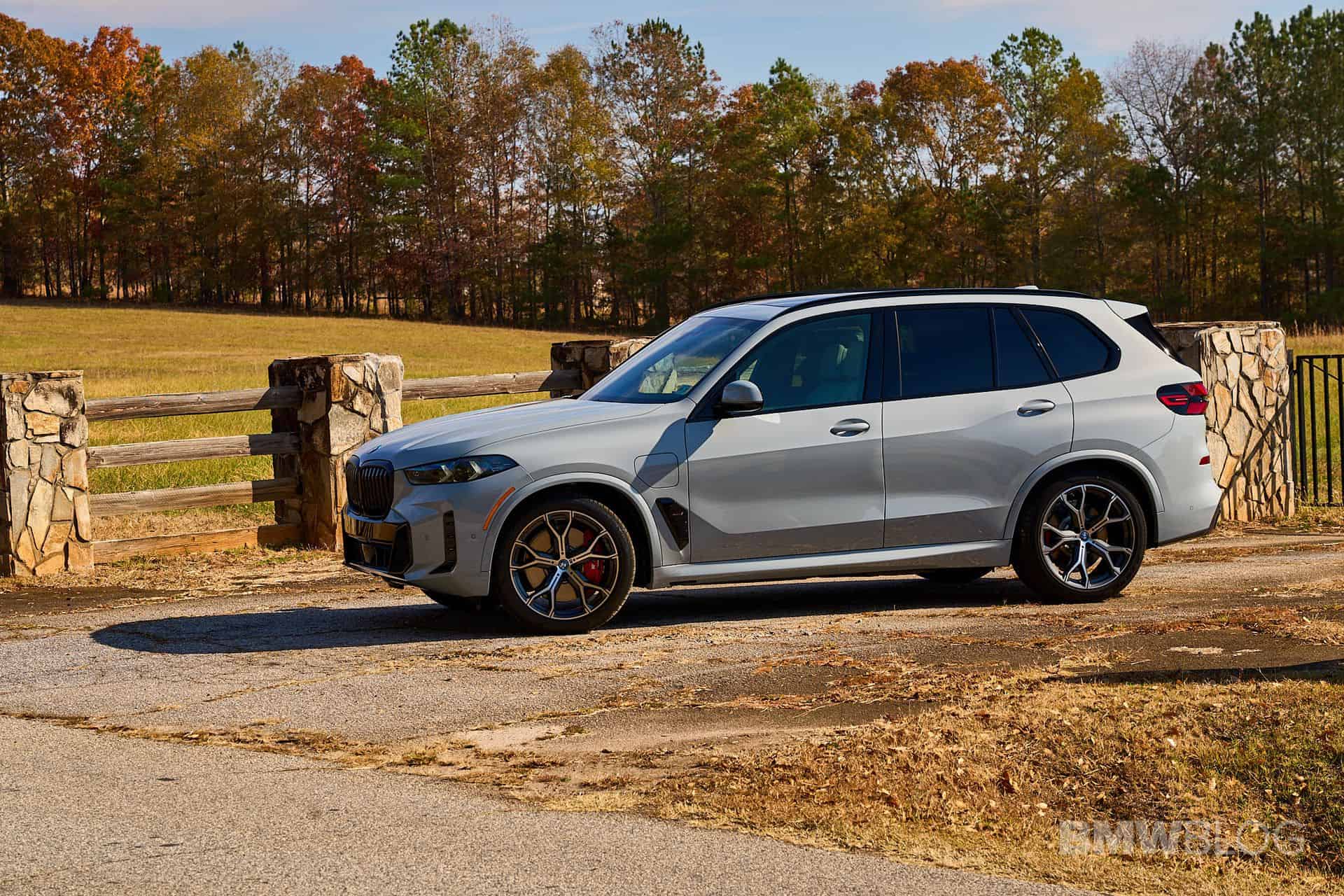
Like the 550e xDrive, the X5 xDrive50e serves very much as a “side door” to performance. The hybrid/B58 combination is good for the same 483 horsepower, and BMW says the SUV scoots from zero to 60 mph in 4.6 seconds. That’s less than half a second off from the X5 M60i, and around a full second away from the X5 M Competition. Of course, the 50e is also over $50,000 less expensive than the full M. Yowch. That leaves a lot of headroom for options, and I can’t help that feel that a well-spec’d X5 xDrive50e might provide way more usable fun than the X5 M. The SUV is already real-world quick; throw on some 21-inch wheels ($800) for some better road feel, grab some M Sport brakes ($650), and enjoy your remaining $48,550 however you please.
BMW 230i (G42)

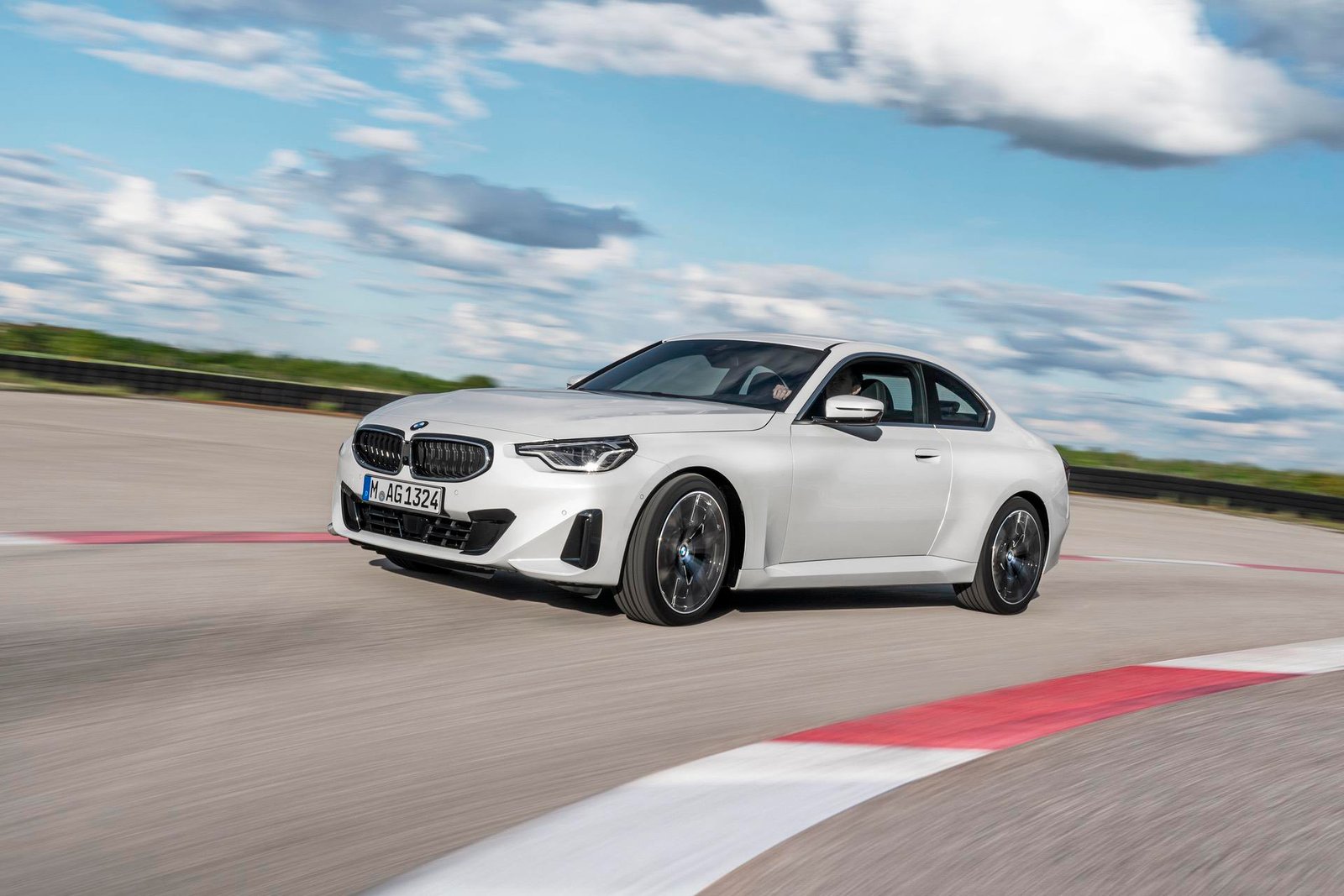
There’s no question that the current 230i is the best proof of the “you don’t need an M” concept. While the least powerful model on this list by a longshot, the perky little B48 four-pot does okay. Turns out, 255 horsepower and nearly 300 pound-feet of torque is more than enough if you know what you’re doing. Balanced chassis tuning, an “acceptable” curb weight of around 3,550 pounds, and a 5.1-second zero to 60 mph time (as tested by Car and Driver) makes the 230i a delightful slice of old-school BMW thrills and approachability. The result is a car you can drive hard without constantly flirting with triple-digit speeds. In many ways, that approach aligns more closely with BMW’s traditional ethos than raw output ever did.
Even if you’re a little heavy-handed with the goodies, a brand-new 230i can be had in decent enough enthusiast spec for around the $50,000 mark. While that sounds like a lot, the M240i now starts at $53,600 and the M2 is another $16,000 upcharge from there. Even compared to the last generation of the M2, though, the 230i is a considerably more comfortable daily driver.
Full M cars remain extraordinary machines. And for some drivers, there’s rightly no substitute. But if you’re not 100% sure the M badge is worth the — sometimes enormous — upcharge, there are a surprising number of options in both the new and used marketplace.
